
An ancient story reemerges underneath the AI vs. Humans noise, and it’s causing deepening, widespread damage across organizations. And it’s not what you think.

The characters and scenarios in this article introduction are composites drawn from real conditions across the utilities industry. Names, organizations, and identifying details have been fictionalized.
Jim Stafford had difficulty falling asleep that night, with the howling wind whipping the rain sideways on his house. Another ‘atmospheric river’ hitting the Pacific Northwest was causing local flooding and miserable moods.
So when the call came at about 1:30 in the morning, Jim bolted upright out of deep sleep while his brain struggled to catch up as he grabbed the phone to answer the emergency call. His heart thumped because he knew what it meant.
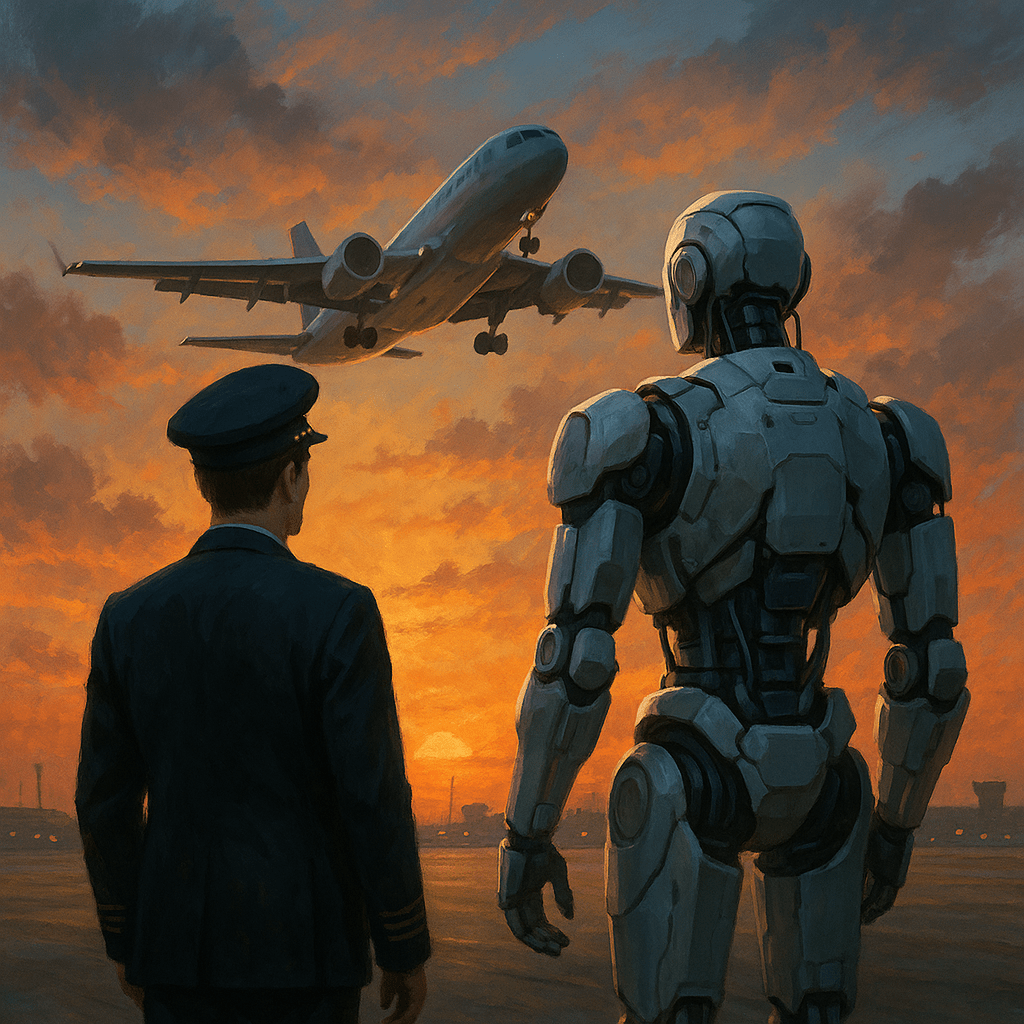
Jim has been with the utility company for thirty-one years. Starting as a trades apprentice in 1995, he later earned his journeyman ticket on a distribution crew upstate, and spent a decade on transmission line maintenance. He then worked on line buildouts for over a decade running power through mountains and valleys into new communities. With that kind of skill set, Jim with his small crew became legend: the high-wire tower jockeys.
But it’s a demanding, complex and risky job, one of those positions that burns people out sooner than most. Now, Jim is only one of two people left in the entire organization who can look at a tower drawing from 1972, cross-reference it against five decades of modifications, field repairs, and parts inventory, and understand what’s failed, what’s needed, and whether it still exists. The other guy is Dave Olsen, who is on vacation in Mexico this week.
One of the Tower 6 foundations on the Greenfield line gave way with the torrential flooding, dissolving the underlying clay and gravel, and now it’s leaning about 45 degrees into the treeline, held in place by the transmission lines and what’s left of the other foundation legs.
Shit, Jim thought, as his hands trembled, throwing instant coffee into the thermos and filling it with boiling water. This is going to be a long night. Actually, a long couple of weeks at least.
Events like this are rare, but when they happen the consequences are catastrophic if not dealt with quickly. A tower at that angle is being held up by the very lines it’s supposed to carry. If it keeps settling, the conductors drop toward the treeline and the saturated ground, and you’re looking at a wildfire ignition, a cascading grid failure, or both. And every minute it stays like that, the load transfers to the adjacent towers, threatening to turn one failure into three.
As Jim threw his knapsack into the truck and climbed behind the wheel, he thought, I’m getting too old for this.
Jim will most likely join the growing wave of early retirees within a few short years, or perhaps even months after this latest crisis. The returns of the job are diminishing, along with his aging body and peace of mind. This job isn’t easy on the body, or a marriage.
Increasingly, Jim will be looking to plan for a cabin by a lake, a small townhome near a golf course in Palm Springs, or eyeing up a nice Airstream he can hook up to his truck and hit the open road to explore the country. And maybe even a small business he can run from anywhere.
What he leaves behind is a vacuum: hollowed out organizational capabilities, person-by-person, skill-by-skill, team-by-team, department-by-department. Workforces are dissolving at the deepest experience levels, and the speed of dissolution is increasing. Companies are losing knowledge and expertise gained over decades.
This is The Quiet Exodus.
The cross-industry physical workforce is the bleeding edge of this loss. Replacement of knowledgeable, skilled workers is not materializing at the pace required to maintain organizational effectiveness.
For example:
- In Jim’s industry, nearly half of the current power sector workforce will retire within the next decade. Roughly 45% of experienced linemen are projected to retire within the next ten years, and even top training programs report applicant-to-seat ratios as high as 10-to-1. Even non-retirement turnover has increased significantly in recent years.
- Healthcare is no better. Over a million nurses in the U.S. are projected to retire by 2030, with more than 50% of RNs currently over age 50. More than 40% of physicians will reach retirement age in the next decade, and Mercer projects 6.5 million healthcare workers will exit by 2026 with only 1.9 million replacements expected. A charge nurse with twenty-five years on an ICU floor carries a mental model of patient deterioration patterns, physician preferences, equipment quirks, and staffing dynamics that no orientation manual can replicate.
- Construction mirrors the pattern: current projections are that 53% of the construction workforce is expected to retire in the next decade. The pace of younger workers entering the trades is not keeping up with retirements, resulting in a growing skills gap that reduces the mentorship opportunities available for new workers to learn directly from industry veterans. The structural steel ironworker, the high rigger, the crane operator working on office tower construction: these are roles where judgment is built through years of physical repetition in high-consequence environments. You can certify someone to operate a crane. But how do you teach them the instinct from a thirty-year operator that wind conditions at 400 feet are about to shift based on how the cable is behaving?
- In water and wastewater treatment, we have perhaps the most alarming trends of all. Between 30% and 50% of the water sector workforce will retire in the next decade, and a Brookings Institution analysis found that 88% of treatment plant operators were aged 45 or older, compared with 45% nationally. Small water system operators are often the system record keepers and have extensive system knowledge that may not be written or stored anywhere but in their own minds. A sudden retirement, illness, or extended leave has the potential to significantly impair system operations. And the anecdote that captures it all: a workforce development specialist encountered a water treatment operator who was still working at age 90 because of the challenge of finding someone else to step up.
Starting in 2011, the leading edge of the boomer generation began retiring, heading into the sunset with often decades of seasoned, critical organizational knowledge, with no effective way to capture it. Then COVID hit and The Great Resignation turned the trickle into a flood, expanding into the mid-career workforce as the ‘quiet quitting’ movement blossomed.
Now, there’s a rip-tide of forces at work. Against the backdrop of widespread layoffers, tech workers are rapidly shifting their cognitive modes from the logical frameworks of manual coding to the nascent art of agent orchestration. Quiet quitting has been replaced by AI Job Apocalypse fears. And ironically, it’s this fear of AI-driven job loss, rather than actual job loss, that is compounding the trend:
- A Harvard Business Review analysis based on a survey of over 1,000 global executives found that AI layoffs are driven almost completely by anticipation of AI’s impact, not its current performance.
- Employer-disclosed AI-attributed layoffs totaled about 55,000, but modeling-adjusted estimates place actual AI-displaced positions at 200,000 to 300,000, roughly 0.13% to 0.20% of total US nonfarm employment. Even at the high end of the estimates, that’s only a fifth of one percent of the workforce.
Meanwhile, the undercurrents of the Quiet Exodus, on the order of millions per year, continues to grow. The clock is ticking, with no structural framework in place to fill the gaps in time to avert a fundamental, widespread erosion of operational readiness and capability across the economy. The knock-on effects include an ever-widening competitive gap between us (meaning North America and Europe) and the rising Asian economies led by China.
At the same time, business leaders are distracted with trying to patch the holes with agentic AI projects, largely trained on documentation and training assets. These initiatives often fail to meet objectives because the underlying premise completely misses the problem space: operations do not depend on user guides and operating manuals. Operations depend on the ‘tribal’ or tacit knowledge and skills in the minds of the people running things in the real world. But this center of gravity that has always held the organization together is slipping away.
Whether by exhaustion, management indifference, or fear of future replacement by AI, the majority of the mature workforce is quietly planning to join the Exodus, while business leaders order more AI and HR plans exit interviews and retirement cake, if that.king plans to join the Exodus, while business leaders and HR plan exit interviews and retirement cake, if that.
For his part, Jim is already mentally preparing for the next phase of his life. It’s well earned. He gave a lot of years to the company, and he enjoyed his work, for the most part. Yet, as he drives the two-and-a-half hours to the site in the driving rain, he wonders who will be sitting in this truck in the middle of the night a year or two from now. He can’t for the life of him think of anyone else in the company other than Dave who can. And Dave has his own company truck.
In Part 2 of the three-part series, we’ll look at what the Quiet Exodus means when it reaches the hospital ward, where the consequences aren’t measured in grid failures, but in lives.
Chris Dollard is Founder and CEO of RoleUp, a platform for capturing, preserving and animating human-layer organizational knowledge. LinkedIn.








 The Human Layer