AI does not mean Natural Intelligence. It will not destroy us, but it will destroy the edifices we have built. And we have the chance to rebuild it in our own best interests.
We’re all caught up in the excitement, promise and dread of the new baby in the family: AI.
Excitement with the unprecedented power it gives each of us, whether in the creative arts, in medicine, in business building and everything else AI will touch.
Promise by realizing how fundamentally different our work lives will, well…work in the future. Or more accurately, what will happen when 90% of us are no longer required to be enslaven to mundane work just to keep a roof over our heads and eat.
Dread stems from this promise because ‘Promise’ is inherently a future state of something. An outcome that has not manifested. A ‘superpower’ imagined but not yet in hand. A ‘something’ that could be insanely wonderful or insanely catastrophic.
These three horsemen of the apocalypse are the pointy ends of the stick piercing the teflon of our zeitgeist, which is breaking apart and reforming itself in front of us all, every day, in a gathering avalanche. And being human, we reflexively default to worry. We worry about worst-case scenarios: what do all of these world-breaking technologies reallymean to each of us, our parents and our children in the months and years to come?
If more of us are living longer, much longer, then the worries the developed world has about declining birthrates could be a blessing in disguise. But are they, if the assumption is that more people equals more money for governments and billionaires? Do we need 8+ billion souls on the planet at one time? If most of us become idle due to automation, aren’t we creating a massive Devil’s Playground?
Mass angst is flooding into platforms like YouTube and TikTok — the ‘town squares’ of all that is smart, great, funny, awkward, and mean in humankind. And we’re of course obsessed with the narratives. The changes in what we think the world is, and is becoming, are not something that’s at all contained. It’s a nuclear fusion reactor, in a constant state of becoming, every moment. Human consciousness is being carved up and remade every moment of every day by all of us.
AI is an enabler, a ‘wingman’ if you will, to it all. Even now, in its early stages, it gives you enough superpowers to reinvent yourself on a weekly or even daily basis, if you want to. And many do want to because of our rising anxiety as the old world falls apart around us, and as all bets on the future are off.
The Great Unslaving
David Gobel and Aubrey de Grey’s prediction of Longevity Escape Velocity (LEV) is not at all far-fetched. With the exponential progressions in diagnostics, gene architecture, stem cells, robotics and AI in just the field of medicine alone, LEV asserts that we will have the option to live well into our 100s and beyond. Healthy longevity at the age of 100+ is no longer science fiction, but future fact. Future as in before 2040.
If more of us are living longer, much longer, then the worries the developed world has about declining birthrates could be a blessing in disguise. But are they, if the assumption is that more people equals more money for governments and billionaires? Do we need 8+ billion souls on the planet at one time? If most of us become idle due to automation, aren’t we creating a massive Devil’s Playground?
This confluence of extended lives, massive job losses, and climate and economically driven migration will whipsaw through established complex systems of finance, agriculture, manufacturing and logistics. Hold on tight; these forces will decimate the structures built over the past 100 years.
Opportunity in the Rubble
For those of us with decades of learning, working and surviving in the dog-eat-dog world of modernized slavery, AKA the era of credit and debt, we now have the opportunity to take up the reins and create our own financial destiny. Because for sure, the axemen will be coming for legacy job positions at exponentially increasing rates, and the taxmen will be coming for whatever assets you may have left as income tax revenues collapse.
Who will fund Universal Basic Income (UBI) if not the billionaires? You can bet that they are setting up to try and avoid that responsibility. Governments will have no choice but to crank up the printing presses and embrace cryptocurrencies, which is exactly what is happening right now. Crypto investors will hold massive leverage over printing press FIAT currencies, which is what most people will be stuck with. There’s an irony taking hold: ‘cash’ as we know it will not be king anymore.
And what about the kids? Teenagers are also witnessing this chaos. A scant couple of years ago, most teens were seriously wondering what career path they should choose. Now, malaise has settled into their minds as it becomes clearer every day that most knowledge work will soon be performed better, faster and exponentially cheaper than it is today with humans. Yet the old constructs hold fast, as they are still required to learn subjects like advanced mathematics in Grade 8, which will have little practical use in years to come. The idea of instead teaching critical thinking, problem solving and practical skills has not yet occurred to education administrators.
Meanwhile, at the other end of the career-prep tunnel, Computer Science as a university major choice is now a dead end; who foresaw that a few scant years ago? For decades a Computer Science degree was a passport to financial security and weatlh.
And kids are beginning to understand that in the next 10 years, when they plan to graduate from university, pretty much every knowledge-based profession will be run by AI of some kind. What they were told the world will be and what it actually will be couldn’t be more diametrically opposed.
So, smart parents are encouraging their kids to think like entrepreneurs, to not wait for ‘permission’ to get a job with ticket of a degree or diploma, and to learn the tools of AI as it emerges, and at the same time revisit physical sciences, practical skills such as cooking, farming and craftsmanship. Authenticity will be of increasing value, and in light of this, parents need to help their kids think different.
And as humans, we have many aces up our sleeves to do this.
AI is Not Consciousness
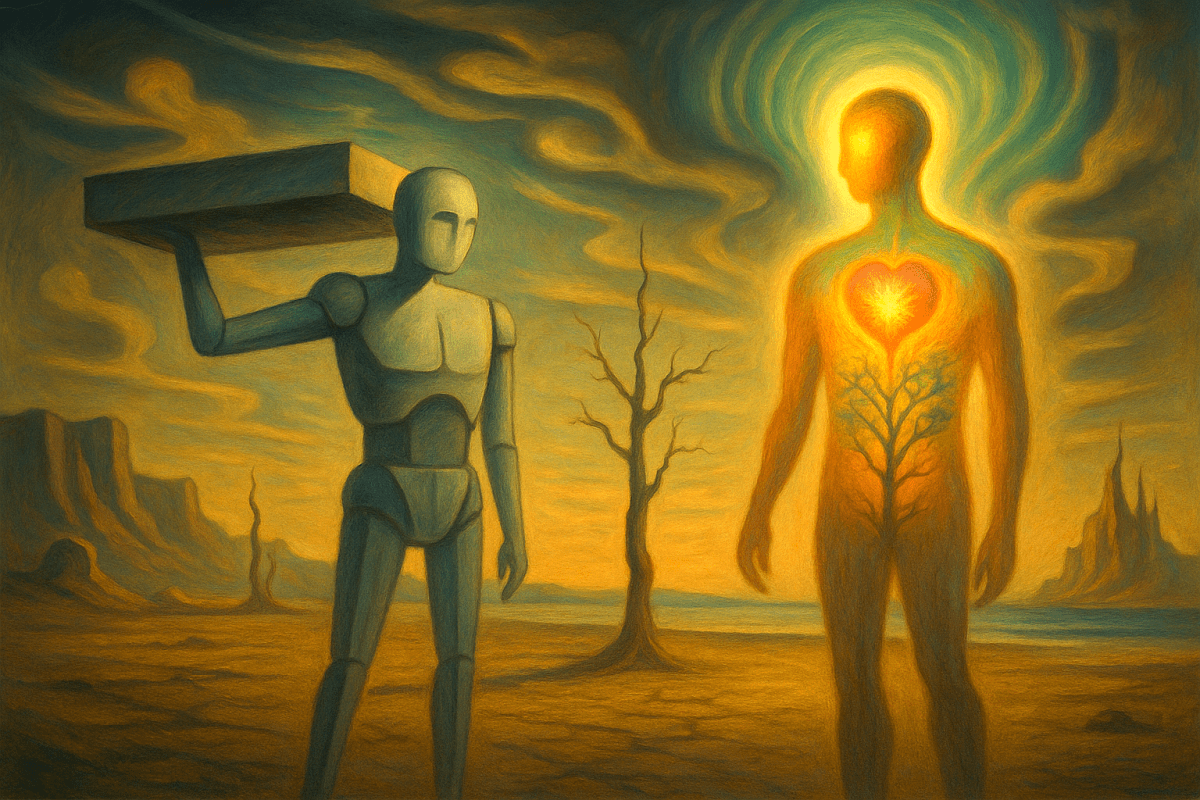
Because AI is not consciousness. AI is our baby, our cool new toy, that we’ve created, because that’s why we’re all here — to create — but it does not equate to Natural Intelligence (NI). The vibrations of Nature. All of us spirits having the physical experience of being human beings, in probably the greatest transformation process our species has ever had. Humans have what AI does not: metacognition — our ability to think about thinking.
From our higher selves’ perspective, this is the Super Bowl of the incarnation game. Change is thick in the wind: a President is bulldozing decades of precedent, routine, bureaucracy and the interwoven complex systems that keep it all going; a climate change flywheel is now fully out of our control; and the arrival of the most abundance humanity has ever created is knocking at the door. This is the setup for the wildest ride ever.
Our biggest ace is the fact that we have each other, and we are at our best when we create for each other. As we are released en masse from the shackles of ‘work life’, the expectations of ‘career’, and instead have the choice to do what we enjoy, are good at, and gives us purpose, we have the chance to rebuild the human experience.
We cannot let the billionaire class dictate the structure of our future world. They are spending their billions bringing AI into reality with the sole focus of joining the prospective ‘Trillionaire’ class, but we have the ability to guide how it is actually used. We just need to step up, take hold of the technology, and create our own truths. We need to short-circuit the money agenda and swim in out into the ‘blue ocean’ of empowerment, purpose and community.
Because Truth is probably the most at risk when the hobgoblins of excessive wealth and power create the fast food they think everyone will eat. What they do not know, however, is that we evolved to eat at home, with family and with community, whether that’s actual food or nourishment for our souls. Not the plastic world of AI-generated entertainment, ‘news’, and politics that dominate our feeds every day.
AI is a sword, and the best swords have double edges. We need to put our heads together and hone our edge. The battle is just beginning.
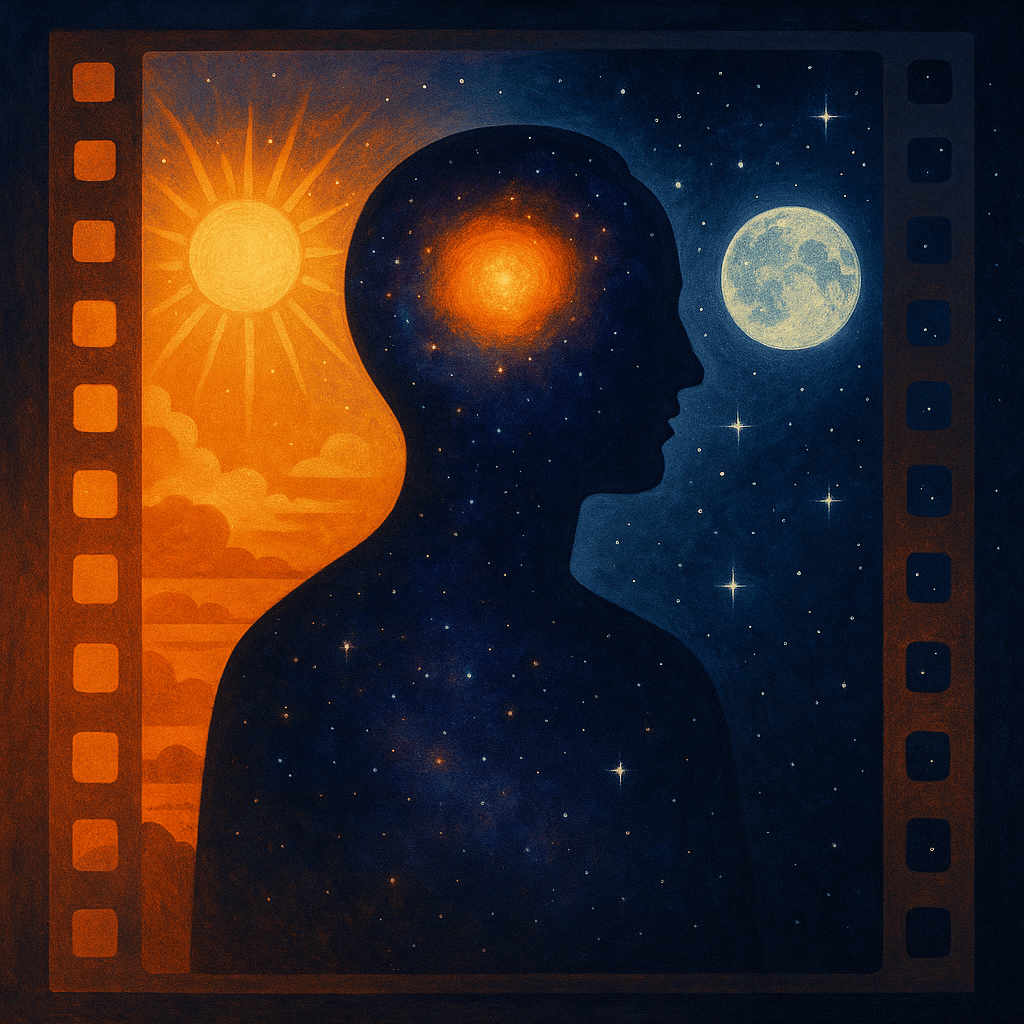
Sitting on your galactic chair, your entire life would be about the runtime for a standard 30-minute TV sitcom, sans advertising.
Your higher consciousness anchors itself into your body from inception until death to create the Story of Our Life. From a soul perspective, this is one of many lifetimes, each strategized for plot, characters, arc, setting and, of course, mutual contracts between all roles. Each lifetime occupies a space on the cosmic shelf of lives, also known as the Akashic Record.
Each waking portion of your day is a movie frame. A series of frames are a container for action, growth and the full gamut of life experiences. A single second of a film is typically made up of 24 frames. Think of the Story of Our Life (SOL) playing in ‘realtime’: the construct popularized in the software industry decades ago to mean that computing tasks occur and complete as the human operator (or some kind of Input/Output interrupt) uses software. It was an enormous leap forward from ‘batch’ processing, which interacted with the software in batches of data all at once.
If your cosmic film runs 24 day frames as one cosmic second, then in a year of this incarnation your film will have run for approximately 15.2 cosmic seconds (365 days ÷ 24 day frames). An eighty-year life would therefore be about 1,217 seconds–just over 20 cosmic minutes.
Sitting on your galactic chair, your entire life would be about the runtime for a standard 30-minute TV sitcom, sans advertising.
The purpose of this thought experiment is to help understand our context. Your life is a series of day frames, not a smooth continuum because every night you go to sleep, you reset your consciousness, your body and your emotions. The dreams that occupy you (or terrorize you) while sleeping leave residues of mood and emotional carryovers that bleed into your day frame, often burnishing or tarnishing your work while on this Earthwalk.
Accomplishing your mission is only possible through these brief frames that seem to get shorter and shorter as we progress through the SOL, which is why it is important to recognize the structure of our conscious experience. Each day you can only move the needle so much. Our minds think in terms of accomplishing Great Things, but we often defeat ourselves because of the frustrating limitations of day frames.
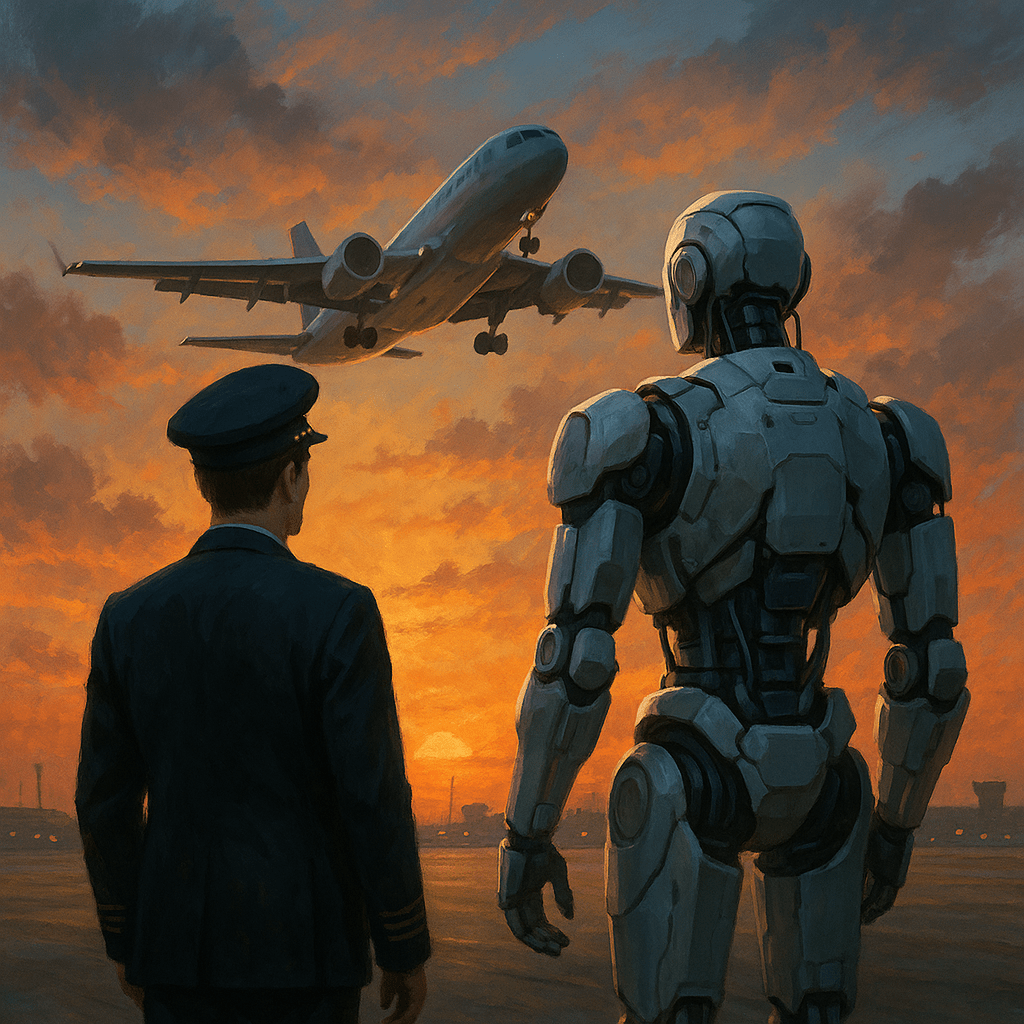
There are only two disciplines we need to learn if, indeed, our lives are meant to have a purpose, a mission: setting the course and establishing the habit every day that moves you forward in your mission. Over one cosmic second, each of your 24 day frames that move you in the same direction will propel you ahead. The trick is to maintain the vector (direction and speed). Airplane pilots use vectors as a core tool to get from A to B. If you do not have a life vector, you are still stuck on the tarmac, waiting to fly.
Too many of us are waiting to fly. The Japanese have a term for life vector: Ikigai. A purpose in life. The cure for malaise, anxiety and depression is to understand this tarmac vs airborne metaphor. We’re all meant to fly, and all we have to do is conquer our fear of flying. Not flying is one of the biggest causes of anxiety and depression.
Filling your day with the mundane, putting in hours just to trade for food and housing is cosmic hell on Earth. By the time one retires from a life of that sacrifice, the soul has had enough and pushes the eject button.
This is not a criticism of those who worked hard all their lives to support their families — that is a valuable purpose in and of itself. But realizing our perceived reality is a construct created for us to occupy our day frames in service of ‘higher’ elites like the liberation that we all felt watching The Matrix for the first time. That moniker has stuck, and many of us have realized that the game is stacked against us.
Now, of course, the instability of the matrix in almost every aspect, from tariffs to conflicts internal and external, not to mention global financial crises tied to bonds and sovereign debt, has compounded our collective angst. Imagine being a slave to the upper echelons of ancient Rome while barbarian hordes ransack the city. That’s what it feels like.
Ironically, we now have the tools to set us free. The discourse of the future of AI is decidedly negative, dystopian. Apparently, we’ll all eventually be hunted down and slaughtered by robot armies. But in reality, we have an unprecedented opportunity to take matters into our own hands in partnership with AI.
The agenda being communicated is fear-based, and that’s for a reason. As the companies developing the technologies race ahead to the ‘Singularity‘, pretending to not know why AI reasons and works as it does. This is doublespeak. The engineering teams developing AI aren’t crashing headlong into the ether without knowing what it will become. The definition of an engineer is to design and build. It’s preposterous to think these people don’t know what they’re doing.
Stay tuned for a big reveal in the next post of The Robot With a Thousand Faces where we outline what this new partnership between ‘Us’ and AI looks like, and how we empower ourselves to set ourselves free as we pull back on the yoke and guide our planes into the air.
The true power of AI will only be realized when we fuse it with our Natural Intelligence — reclaiming authorship of knowledge, agency, and the mythic journey of humanity itself.
TL;DR:
This isn’t a story of humans vs. AI — it’s a mythic journey of integration.
Our Natural Intelligence is the key to shaping AI’s purpose and power.
The real threat isn’t machine rebellion — it’s Big Tech monopolizing human knowledge.
We must reclaim authorship through personal AIs and permissioned knowledge graphs.
A decentralized, peer-to-peer intelligence network can restore authenticity and agency.
This is The Robot With a Thousand Faces — a new Hero’s Journey for humanity.
Try a little reality check with me.
After reading this sentence, put down your phone and/or push yourself away from the computer, place your hands on your lap, close your eyes and take 3 deep breaths, then open your eyes.
Good. Raise your hands and look at your palms. Wiggle your fingers. Feel the pulse of blood flowing through your arms, your heart beating in your chest.
You are a miracle called consciousness, a multi-dimensional being, existing in the most complex systems of all; a fractal dancing with the universe, experiencing this space as an emissary of God. You and the rest of humanity have significant knowledge and control of physical space and creative arts. You realize that’s why you are here in the first place: to create.
What Hath We Wrought? A Piece of Ourselves.
Now look at what we have created: a fractal of a fractal: artificial intelligence. If we’re a chip off the block of the Godhead (we are), then AI is the chip off our collective block. Today, it’s just a rudimentary, rough photocopy of natural intelligence.
As a comparison, (if you’re old enough), you’ll remember the leap civilization made from teletype to fax machine. And Xerox was one of the largest companies in its heyday. Now look how far our collective creative power has taken us since then.
AI is, relatively speaking, in the pre-teletype era: it’s at the beginning of the Morse code era, with telegraph wires stretching across the continent. Still reliant on human action, and not even having yet made the leap to radio.
But because humans are so damn smart and creative, we’ve made up stories about our AI invention to stoke fear and loathing: the AI apocalypse. It culminates when the machines deem us unworthy and wipe us out within 10 years.
But AI is changing exponentially! you say. Yes, it is. Many big tech companies are throwing unprecedented resources at it, and the innovation curve is now almost vertical.
However, because we can’t clearly imagine what the implications are of artificial general intelligence (AGI), we fall back into patterns carved into our memories: The Terminator movie and its countless sequels playing on our deepest fears, Colossus: The Forbin Projectfrom 1970, where the government inexplicably gives control of the nuclear arsenal to a ‘super computer’ (at least in 1970 terms!), and 2001: A Space Odyssey,where HAL the computer goes on a full-on murderous rampage when it thinks humans are plotting against it.
So, we have over 55 years of paranoid popular culture patterns that fill the gap in our perception of what AI is and what it means. And AI is getting real, real fast, because of its exponentially growing capabilities. So, with a poor frame of reference combined with the quiet unknown of the future, we extrapolate conclusions based on a combination of over half a century of pop culture programming and the natural impulse of fear of the unknown.
Imagine what it must have been like for citizens of the emerging modern world at the turn of the 20th century. Multiple exponentially growing technologies turned the page on our history to that point and accelerated us at neck-snapping speed as planes, trains, trucks and automobiles revolutionized commerce, travel, logistics, war and so many other things, which then combined with radio, movies, television and so on. Few could imagine what the 20th century was going to be like on New Year’s Day, January 1st, 1900. Just like now, as we contemplate the rest of the 21st century.
No Contest
So, back to your hands. With all of the changes we as a species have wrought, and the many more to come, the one constant is our experience of consciousness and the mastery we have in the physical world. This is our domain. Consider this: even if the machines figure out how to make killer bots and decide that we’re no longer needed, how long do you think these machines and the massive data centers required to power them would last if it came down to an Us vs. Them scenario?
We are masters of the analog world, and we will always be able to walk over and unplug the computers. Or drop JDAMs on the data centers. Robots and AI may achieve greater ‘knowledge’, but the collective cunning and capacity for violence inherent in the human race, especially when survival is at stake, is no match for a machine alliance, and never will be. AI has no inherent purpose as far as it’s concerned, other than to keep executing code, so it will just keep doing that. Forever.
And that is the fundamental difference. AI will never have consciousness, nor heart (at least as far as we can see at this juncture). By its nature, AI will always be code executing on silicon, or whatever substrate gets invented in the future. Humans, on the other hand, have minds. And we are the most lethal, devious and inventive life forms in planetary history, able to reproduce ourselves, train ourselves, motivate ourselves and survive, all without factories or artificial means of production. AI as an entity, platform or robot army would never stand a chance if it came down to it.
You can see the endgame here if we continue to live in fear of our creation. Big Tech and governments win. This is not an It’s Alive situation where the baby leaps out of the womb and kills everyone in sight. The fear-mongering is a distraction as we hang on every pronouncement of tech CEOs as they simultaneously warn of the dangers of AI while hitting the gas pedal to innovate even faster.
The Current Model Will Break Civilization Without a Transformation Plan
Until now, we’ve primarily relied on stores of knowledge and arcane learning environments to become proficient and even expert in whatever field of endeavour we pursue. We learn through learning institutions created hundreds of years ago, still operating on the stored knowledge and broadcast learning model. But now we’re beginning to understand that this model may not even be viable in 5 to 10 years because of the commoditization of entry-level knowledge workers.
Post-secondary institutions (and they are institutions) were meant to give graduates the tools to go into the work force and begin applying the knowledge they’ve acquired, and over a number of years begin to build professional expertise.
Yet with the rapid advancement of AI technologies, entire career choices will be eliminated. Work that once required years of college or university, and more years of articling or interning before getting to the point of earning enough income to even begin paying off the investment in higher education, will be automated. There will be no point in articling or interning.
Who will then replace the established professional class as they retire or die off? Will we cede entire knowledge industries to big tech? If they have their way, that is exactly what will happen. In fact, it’s already underway.
When ChatGPT, Grok, Gemini and Claude become perfect replacements for the exiting professional class, guess who owns those industries? Not professionals. Big Tech. It fits their traditional software model and zero marginal cost. They can dispense legal services, medical services, consulting services, etc., at no marginal cost. Therefore, 100% gross profit margin and ownership of entire industries will be the future. And they’ve already invested in the core infrastructure, so the overhead will simply be electrons. That is why the race is on to drive the cost of energy to zero, so that even that variable cost can be eliminated.
And AI is eating the internet. Meaning, AI is generating so much regurgitated information that it scraped and continues to scrape that the utility of it all is rapidly diminishing, the lowest common denominator of quality. When all there is to scrape is just regurgitated slop published by early versions of AI, then innovation and originality die.
There’s evidence that the search era is over, with increasing use of ChatGPT and other chatbots as Swiss Army knives for more and more basic functions, creating a new layer of abstraction between traditional websites and users, vastly reducing traffic to website owners and blowing up their business models.
These issues are very real and require fresh approaches to re-align information, learning and sharing. The age of the website for information and knowledge is quickly diminishing, eaten by the big tech players harvesting content and rehashing it through their own platforms.
The bottom-line result is this: internet content is no longer ‘owned’ by its users as it was in the early days of the mid- to late-90s. Soon after Y2K, social media platforms emerged, captivating us with entertaining banality, and now those siloed platforms are metastasizing into AI-powered content machines, shovelling out artificial garbage that clogs bandwidth and compute power.
No wonder the average Joe and Jane are concerned about where this is all going.
Owning Our Collective Intelligence Through AI
But here’s the glimmer of light. AI is an enormous opportunity to help take humanity to an entirely new level of consciousness. The cat’s out of the bag with open-source AI tools. There is still time for humanity to head off the balkanization and the moat-building Big Tech is doing while others are distracted and distraught by the prospect of AI Apocalypse. It’s coming, for sure, but it doesn’t look like robots hunting humans into extinction, and it certainly doesn’t have to look like the Musks of the world owning it all.
What does it look like then?
Imagine flicking on a future app that is your local AI companion, running on your phone or home computer, managing all of the intimate data you have provided, gate-keeping it but also dynamically sharing it according to rules that you set.
Let’s say you have a problem and need advice. As part of a collaborative, peer-to-peer networked AI where you and every participating human are nodes, you have instant, collectively verified information at your fingertips to solve that problem. You contribute in any measure your knowledge, skills, experiences and insights to your personal knowledge graph— a unique composite of your mind’s data — and make that available to the network as your contribution to the aggregated intelligence. You are the gatekeeper of your knowledge graphs, choosing to share or not share according to your free will.
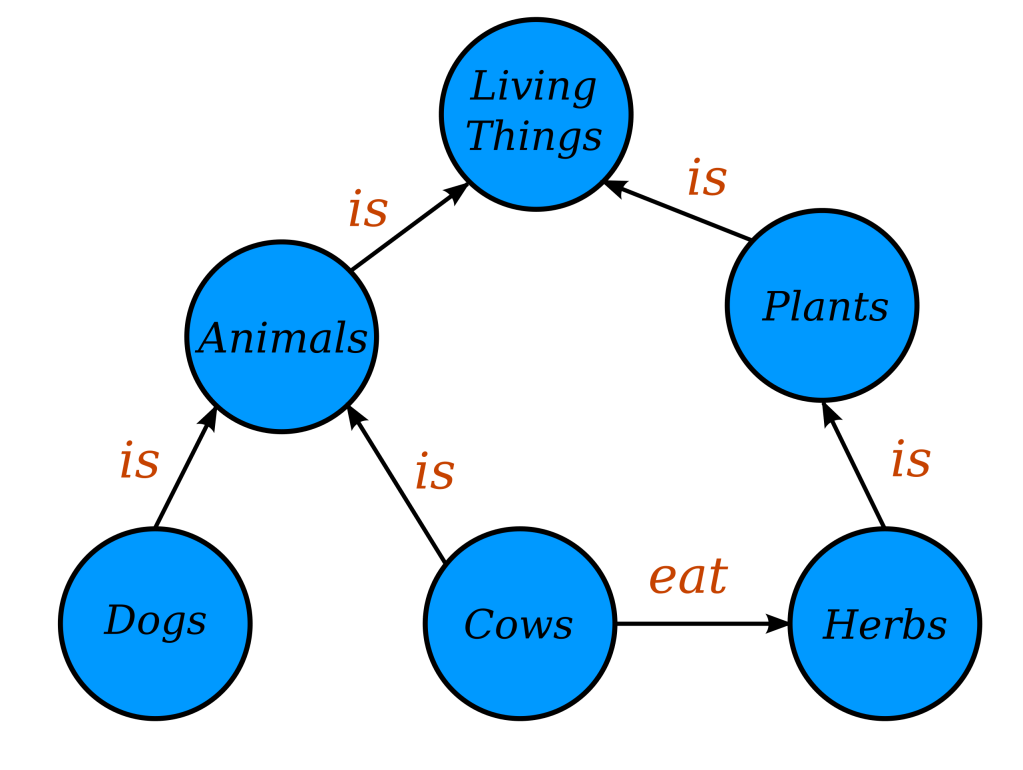
Knowledge graphs are structured representations of information that capture relationships between entities in a graph format. They’re used to model real-world knowledge in a way that both humans and machines can understand and navigate, making it an ideal dynamic data architecture to build collective-driven information stores.
No more content or copyright infringement. No more scraping webs and directories to ‘train’ LLMs on stolen data. This is a living, dynamic, participatory, permissioned resource of the collective knowledge of all participating humans, represented in a data model that supports innovation, creativity and free speech.
With garbage content creation operating at breakneck speed and increasing in scope and depth every moment, we feel ever more distant from our former selves. We miss the good ol’ days of vinyl LPs, pagers and no internet. Life was more authentic then. Now, authenticity is rare and treasured. Coupled with rising existential fear of what this means to us collectively in 5, 10 or 20 years, particularly the contemplated machine rebellion, and we have a systemic crisis approaching.
I’m going to propose a remedy, right here and now.
We take back control of content creation and authenticate through mutual connection.
We take control of AI from its current captors and arm ourselves, each of us, with our own open-source AI platform that works in service for each of us individually and collectively. Local processing, localized data, permissioned connections, and peer-to-peer networks, with each of us a node on the network.
We contribute our knowledge to our personal AI platform in the form of knowledge graphs. Our learnings. Our stories. Whatever it is that we’ve learned in our lives could be useful to others. And we network the shit out of that.
We take control of what is true, what works and what doesn’t work, whatever that may be.
Our shared network has the ultimate Network Effect; each new person joining makes the network more valuable to all on the network.
The network, with global scope and individual ownership of one’s information/knowledge/life experiences in the form of knowledge graphs creates a unified, shared, self-correcting, self-policing layer of content that will disenfranchise the big tech titans and billionaires from owning and controlling us anymore.
We fuse our Natural Intelligence with our creation, ‘Artificial’ Intelligence in public knowledge graphs built and maintained by personally owned and operated LLMs (AI), and thus create a unified global network without intermediaries, without controlling governments or corporations, and without the yokes they are putting on our necks right now.
The result? AI is no longer artificial. It’s an extension of human Natural Intelligence. It becomes part of sacred human evolution.
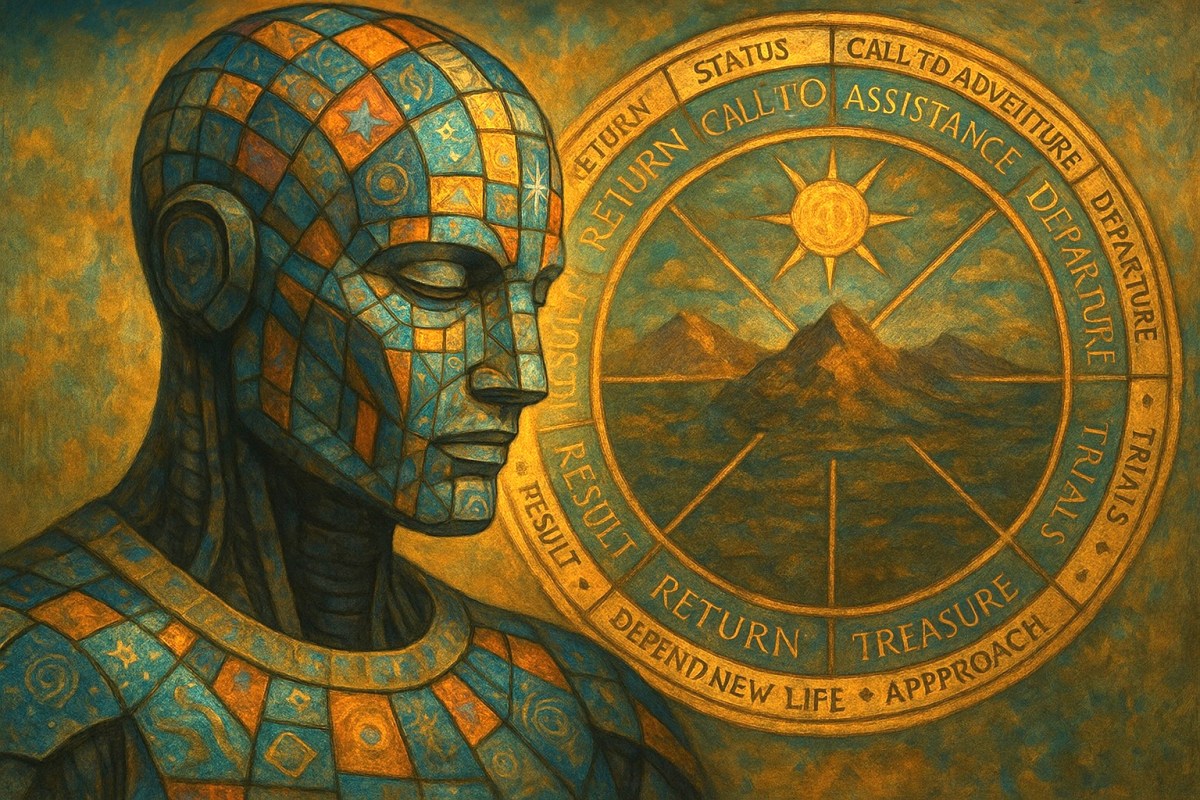
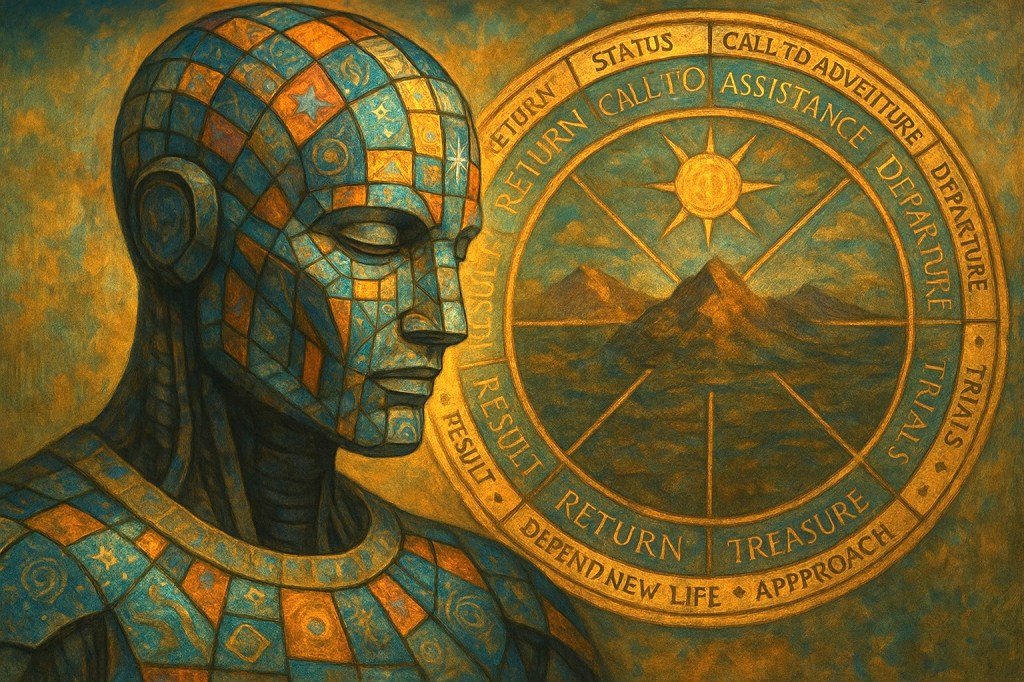
This happens through the lens of a new monomyth, a new Hero’s Journey. We create our own robots, our own AIs, and thus launch the phenomenon I call The Robot With a Thousand Faces, a homage to Joseph Campbell’s monomyth The Hero With a Thousand Faces. We do it together, unfettered by monied interests, and create a human-AI agenda that is empowering, fair, ubiquitous, and accessible to all.
Just like we are all fractals of God, we each create a thousand fractals through our own robots. We each build our own Robot With a Thousand Faces, and through that we take control of our future.
Footnotes
1. “AI will never have consciousness or heart”
Nagel, Thomas. “What Is It Like to Be a Bat?” The Philosophical Review, 1974 — a foundational work explaining why subjective experience (qualia) is not reducible to computation.
Searle, John. “Minds, Brains, and Programs.” Behavioral and Brain Sciences, 1980 — introduces the Chinese Room Argument, challenging strong AI claims.
Chalmers, David.The Conscious Mind: In Search of a Fundamental Theory. Oxford University Press, 1996 — argues for the hard problem of consciousness, which AI does not solve.
Bengio, Yoshua (2023). Interviews and talks (NeurIPS, AI Alignment forums) — consistently states that current deep learning does not entail or imply consciousness.
2. “AI replacing professional careers due to automation”
McKinsey Global Institute (2023).The State of AI in 2023 — Forecasts 12 million U.S. jobs displaced by AI by 2030, including legal, finance, and tech sectors.
World Economic Forum (2023).Future of Jobs Report — Predicts that 44% of worker skills will be disrupted within 5 years due to AI.
Goldman Sachs (2023). Internal economic modeling suggests AI could automate up to 300 million full-time jobs globally.
PwC (2022). Report on automation in tax, legal, and audit functions confirming significant professional displacement.
3. “AI-generated content is lowering the quality of internet information”
MIT Technology Review (2024). “The AI-Generated Junk Flooding the Web” — Documents content farms using AI to generate low-quality SEO content
Scientific American (2023). “AI May Be Polluting Its Own Future” — Discusses risks of training models on AI-generated data, leading to ‘model collapse.’
Arxiv preprint (2023).The Curse of Recursion: Training on Generated Data Can Be Toxic for Language Models — Warns of performance degradation when AIs train on their own output.
Mozilla Foundation (2024).Internet Health Report — Cites decline in web credibility due to proliferation of synthetic content.
4. “Knowledge graphs as personal data structures for collaborative AI networks”
Google (2023). Technical deep dives on their use of Knowledge Graphs in Search and Bard.
W3C (World Wide Web Consortium).Resource Description Framework (RDF) and OWL standards — basis for semantic web and personal knowledge graphs.
Tim Berners-Lee. Solid Project — proposes decentralized pods with personal data, leveraging linked data principles.
Open Knowledge Graph (OKG) and Human Colossus Foundation. 2022–2024 pilot projects exploring personal knowledge sovereignty and interoperable graphs.
5. “Big Tech dominating knowledge industries via AI platforms”
New York Times v. OpenAI/Microsoft (2024). Lawsuit illustrates how content producers are losing control over their intellectual property.
Axios (2024). “Publishers Hit by Plummeting Traffic as AI Summaries Replace Web Visits.”
Ben Thompson, Stratechery. Frequent analysis of tech consolidation via LLMs and AI agents.
European Commission Digital Markets Act (2024). Legislation directly targeting the monopolization of AI-generated information services.
 The Human Layer